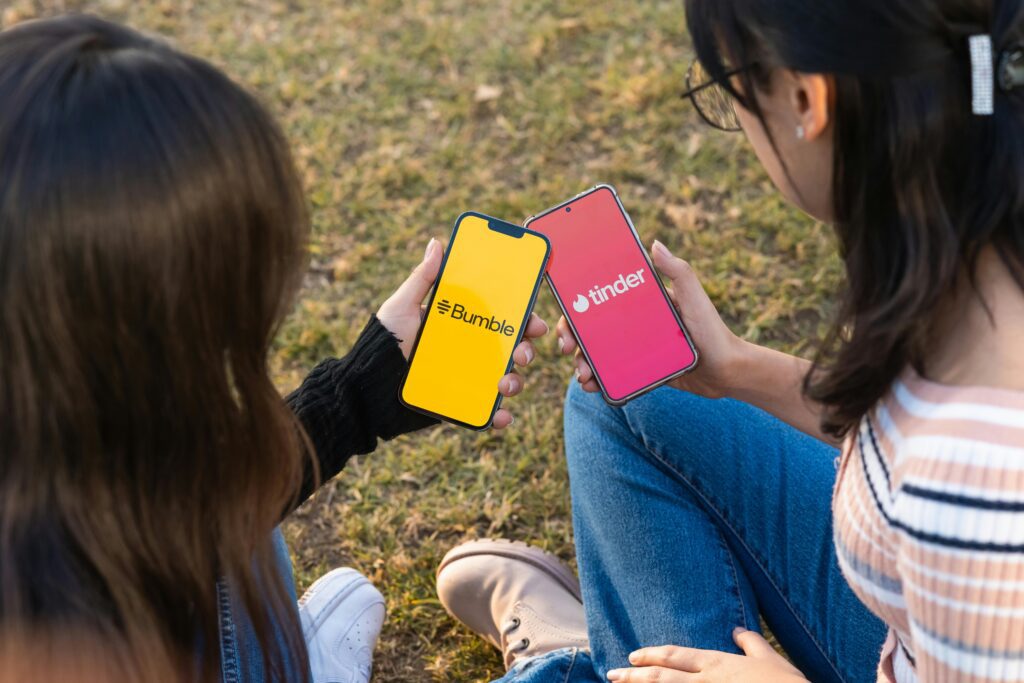
Should you delete dating apps in 2026? A growing number of singles already have. Between 2023 and 2024, 1.4 million people in the UK alone uninstalled their dating apps. Tinder lost nearly 600,000 users. Bumble lost 368,000. And these are not people switching to a different app. These are people who decided they were done.
If you have been wondering whether to join them, this is the conversation you need to have with yourself first.
Related Post: Is It Possible to Find Real Love on a Dating App? What the Data Says
The breaking point is real
There is a specific moment when dating app fatigue turns into something deeper. It is not the bad date or the ghosting or the conversation that died after four messages. Those are annoying but survivable. The breaking point comes when you realise the app is no longer making you hopeful. It is making you numb.
Seventy-nine percent of dating app users report feeling burnt out. Only 12 percent say they are actually satisfied with the experience. For context, even the most complained-about airlines score higher in customer satisfaction than the average dating app.
The exhaustion is not just emotional. Researchers have found that people who spend more than 45 minutes a day on swipe-based platforms experience a 40 percent increase in emotional depletion. A major meta-analysis published in 2026, drawing on data from over 26,000 people, confirmed that dating app users show significantly higher levels of depression, anxiety, and loneliness compared to people who do not use them.
Read that statistic one more time. The tool designed to connect you with people is statistically associated with making you feel more alone.
What actually happens when you delete the apps
Most people expect to feel panicked. What if I miss someone? What if my person is one swipe away? What if everyone else is on the apps and I am the only one who is not?
Here is what people actually report feeling when they delete.
Relief comes first. That low-grade anxiety you did not even realise you were carrying, the one that hummed in the background every time you saw a notification or checked your match count, suddenly goes quiet. Your phone becomes a phone again instead of a judgment machine.
Then comes boredom. This is the uncomfortable part. Without the app to reach for during idle moments, you are left with yourself. Your own thoughts. Your own feelings about being single. This is where most people reinstall. But if you sit with it, something shifts.
You start noticing people. Not profiles. People. The barista who always remembers your order. The person at the running club who makes everyone laugh. The friend of a friend at the dinner party who asks interesting questions. These are not strangers reduced to six photos and a bio. They are full human beings with energy and warmth and all the things a profile picture cannot capture.
Related Post: Why Is Dating So Hard in 2026? (And What Nobody Tells You About Why It Hurts)
The friendfluence factor
One of the biggest dating trends of 2026 has nothing to do with technology. Forty-two percent of singles say their friends influence who they date. Thirty-seven percent are actively planning group dates and double dates. Over a third say they look at their friends’ relationships as inspiration for what they want.
This is not new behaviour. It is old behaviour making a comeback. Before dating apps existed, the most common way people met their partners was through mutual friends. And there is a good reason for that. When a friend introduces you to someone, there is a built-in layer of trust. Someone who knows both of you has already done a basic compatibility check. There is a shared social context. There is accountability because neither person can ghost without it getting back to the group.
Research backs this up. Couples who meet through friends are 30 percent more likely to stay together long term compared to couples who meet online. The vetting that happens naturally in friend groups, the kind of casual observation of how someone treats waiters and handles disagreements and shows up for the people they care about, is exactly the kind of information that dating apps strip away.
The rise of meeting people in the real world
Something genuinely interesting is happening in 2026. People are not just leaving apps. They are actively creating new ways to meet.
Running clubs have become one of the most popular places for singles to connect. Cooking classes, book groups, language exchanges, and volunteer projects. Platforms that organise singles events around shared activities are growing rapidly. The model is simple. Put people in a room together doing something they enjoy. Let the connection happen naturally. No profiles. No algorithms. No swiping.
The reason this works is not romantic. It is neurological. When you meet someone while doing an activity together, you are side by side rather than face to face. You are collaborating rather than evaluating. Your nervous system is in a fundamentally different state than when you are sitting across a table from a stranger, trying to decide if they are worth a second date.
Active first dates, whether they happen through these events or through old-fashioned asking someone out, are 25 percent more likely to lead to a second date compared to traditional sit-down meetings. The shared experience creates a bond that no amount of texting can replicate.
Related Article: I deleted my dating apps and I’ve never been happier, here’s why
Dating on your own terms
Here is what the smartest singles in 2026 are actually doing. They are not quitting dating. They are quitting the version of dating that made them miserable.
Thirty-five percent of singles this year say they want what Tinder calls a “low-key lover.” Someone chill. Someone who avoids drama. Someone who radiates good energy. That is not someone who gave up on love. That is someone who stopped forcing it.
The people who find the best relationships in 2026 are the ones who date from a place of fullness, not emptiness. They have their own interests, their own friendships, their own sense of purpose. They are not swiping out of loneliness at midnight. They are genuinely open to connection but not desperate for it.
The difference is not whether you date. It is how you date. Are you dating reactively, swiping because you are bored and hoping something sticks? Or are you dating intentionally, showing up as yourself and looking for someone who actually aligns with the life you have already built?
That shift changes everything. And it does not require deleting every app. It requires finding the right one.
Related Post: Spiritual Dating App — Why Mainstream Apps Fail Spiritually Aligned People
The honest middle ground
I am not going to tell you to delete your apps forever. That would be as dogmatic as telling you to stay on them.
Here is what I will say. If the apps are making you feel worse about yourself and about dating in general, taking a break is not quitting. It is an act of self-preservation. The American Psychological Association found that implementing strict boundaries around app usage led to a 60 percent reduction in dating-related anxiety. Sometimes, the most productive thing you can do for your love life is to stop treating it like a task and start treating it like something that deserves your energy when you are at your best.
If you do keep the apps, treat them differently. Stop swiping for an hour every night. Limit yourself to twenty minutes. Have a maximum of three active conversations at any time. And move offline as quickly as possible. Five messages and then a coffee. If they will not meet, they are not serious. Unmatch and move on.
But also consider that the future of dating might not look like what we have now. The apps that are starting to get it right are the ones that lead with something other than photos. Apps that match you on values and voice and emotional depth before you ever see someone’s face. Apps that ask you who you really are before they ask what you look like.
The swipe era is ending. What replaces it will be built by the people who got tired of the old way and demanded something better. People who believe that connection should start with who you are, not what you look like.
That future is closer than you think.
CoreAllure is a dating app that starts with who you are, not what you look like. We ask the questions other apps are afraid to, then match you on values, energy, and voice. Join the waitlist at coreallure.com.
Related Article: Why Deleting My Dating Apps Was The Best Decision I Ever Made