
Is It Possible to Find Real Love on a Dating App? What the Data Says

Quick Answer:Yes, real love on dating apps is still possible. Around 25 to 30 percent of couples now meet through apps, and over a quarter of recent newlyweds met this way. But success depends heavily on how you use them and which app you choose. Swipe-first platforms work against you. Intentional, depth-first platforms work with you.
If you have ever deleted a dating app at midnight and reinstalled it by the weekend, you already know the strange relationship most of us have with these things. We do not fully trust them. We also cannot quite walk away. So the honest question is worth asking properly: can you actually find real love on a dating app, or are you just feeding a machine?
The answer is yes, you can. The data is clear on that. But the same data also explains why it feels so much harder than it should.
What Does the Data Actually Say About Dating App Success?
The numbers are stronger than the cynics admit. Stanford’s How Couples Meet and Stay Together study, the most respected research on this topic, found that meeting online became the single most common way heterosexual couples meet back in 2017, when 39 percent of new couples met that way. Michael Rosenfeld, the sociologist behind the study, puts the share of couples who meet specifically through dating apps at 25 to 30 percent, a figure that has stayed steady for years.
Wedding industry surveys back this up. The Knot’s research on recent newlyweds found that more than a quarter of couples who married met through a dating app, and among adults under 30, one in five partnered people met their current partner online.
So the apps work, in the sense that millions of real relationships start there. The problem is the experience of getting to one of those relationships, because that part has been getting worse, not better.
Why Does Finding Love on Apps Feel So Much Harder Now?
Because the apps changed how you evaluate people, and not in your favour.
The average user spends less than three seconds on a profile before deciding. Three seconds is enough time to judge a photo. It is not enough time to notice anything that predicts an actual relationship: how someone communicates, what they value, whether they ask about your day or only talk about theirs.
We covered this in depth in Why Modern Dating Apps Are Making You Worse at Dating, but the short version is this: swipe culture trains rapid dismissal, texting replaces real conversation, and the constant cycle of matches that go nowhere produces what users now call dating app fatigue. You are matching more than ever and connecting less than ever.
Related Post: Why Is Dating So Hard in 2026? (And What Nobody Tells You About Why It Hurts)
Are Most Dating Apps Actually Designed to Help You Find Love?
No, and this is the part most apps would rather you not think about.
Mainstream dating apps make money from your attention, not your relationship. The longer you swipe, the more ads you see and the more likely you are to pay for boosts and premium tiers. A user who finds a partner and deletes the app is, from a revenue perspective, a lost customer. That incentive shapes everything: the endless deck of profiles, the unpredictable dopamine of a new match, the features that reward checking the app one more time.
This is also why genuine people often struggle on these platforms. The system rewards polished, performative profiles because those generate the most engagement. Depth and character take time to show, and time is the one thing a fast-scroll feed never gives anyone. If this cycle sounds familiar, you may recognise yourself in Why You Keep Attracting the Wrong People.
What Do People Who Find Real Love on Apps Do Differently?
The couples who make it out of the apps share a few habits, and none of them are complicated.
They move from texting to a real conversation fast, usually a voice call within days, because hearing someone’s actual voice reveals more than weeks of messages. They read profiles instead of scanning photos. They ask real questions early, the kind that surface values rather than hobbies. And they treat the app as a doorway, not a destination: the goal is to get off the app and into a real connection as quickly as possible.
Notice what all of these have in common. They are the opposite of what the apps are built to encourage. Finding love on a mainstream app means swimming against the current of its own design.
Related Post: Why Swiping Left and Right Is Ruining Your Love Life (And What To Do Instead)
How Is CoreAllure Built Differently?
CoreAllure exists because swimming against the current should not be necessary.
The app should be the current.
At the centre of CoreAllure is Luna, an emotionally intelligent AI companion who acts as your guide rather than your dealer. Luna helps you hear the tone and energy in someone’s voice intro, spots low-effort conversation patterns before you waste weeks on them, and gives you gentle nudges when a genuine connection deserves more of your attention.
Then there is the 48-hour rule. Every match comes with a 48-hour window, so conversations either become real or make room for ones that will. No one sits in your inbox for three weeks pretending to be interested. No slow fades. No breadcrumbing economy.
The result feels different because it is structured differently. Voice first, so you meet a person before a photo gallery. Values first, so compatibility means more than attraction. And a pace designed to build the exact skills, patience, presence, and honest evaluation, that the data says successful couples use anyway.
CoreAllure is for people who want the convenience of an app without the casino attached.
CoreAllure is a dating app that starts with who you are, not what you look like. We ask the questions other apps are afraid to, then match you on values, energy, and voice. Join the waitlist at coreallure.com.
Frequently Asked Questions
Is it still worth using dating apps in 2026?
Yes, if you use them intentionally. Around 25 to 30 percent of couples meet through apps, so the channel works. Your odds improve dramatically when you choose platforms designed for depth over engagement and move conversations to voice quickly instead of texting indefinitely.
What percentage of couples meet on dating apps?
Stanford research puts couples who met specifically through dating apps at 25 to 30 percent, steady since 2017. Counting all online channels, the share is higher: 39 percent of heterosexual couples met online by 2017, and more than a quarter of recent newlyweds met through an app.
Why do my dating app conversations always die out?
Usually because texting on apps rewards low effort. With endless other matches available, neither person invests, and conversations fade. Moving to a voice call early, asking values-based questions, and setting a time limit on text-only chat are the most reliable fixes.
What should I look for in a dating app if I want something serious?
Look for slower, intentional matching, voice or values-based profiles instead of photo decks, features that discourage ghosting and low effort, and a business model that wins when you find someone, not when you keep scrolling.
How is CoreAllure different from Tinder, Bumble, and Hinge?
CoreAllure puts Luna, an emotionally intelligent AI companion, at the heart of the experience, alongside voice-first profiles and a 48-hour match window that eliminates slow fades. It is built to help you choose better and connect deeper, not to maximise your time in the app.
Related Articles: Can You Find Love On Online Dating Sites Or Dating Apps?
Related Articles: 179. The complete guide to finding love on a dating app
Ready for a different kind of dating app?
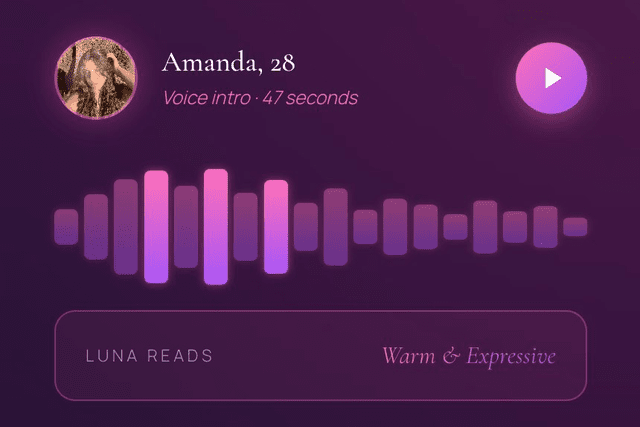
Why Voice Intros Are Better Than Photos in Dating
Why are voice intros better than photos? Because a voice carries the things a photo cannot: warmth, humor, energy, the way someone actually is. You can…
The Dynamics of Long-Distance Relationships
Quick Answer: Long-distance relationships work when two people share a clear goal, communicate honestly, and protect the connection with small daily rituals instead…

Are Dating Apps Making You Worse at Dating?
Are dating apps making you worse at dating? Yes. They train you to swipe rapidly, destroy your attention span, replace real conversations with mindless texting, and…