
Are Dating Apps Making You Worse at Dating?

Quick Answer:Are dating apps making you worse at dating? Yes. They train you to swipe rapidly, destroy your attention span, replace real conversations with mindless texting, and give you so many options that you struggle to choose anyone. The solution is a two-week reset and tools built for depth instead of dopamine.
Modern dating apps are making you worse at dating, and you probably have not noticed because it happens so gradually.
You used to be able to walk up to someone and start a conversation. Now the thought of it makes your palms sweat. You used to be able to sit through an awkward silence without reaching for your phone. Now silence feels like failure. You used to give people a chance. Now you make a decision about someone in two seconds and move on without thinking twice.
The apps did not break dating. They broke the skills you need to date.
How Do Dating Apps Destroy Your Attention Span?
Dating apps trained your brain to evaluate people the way you scroll through Instagram. Fast. Shallow. Next.
The average time someone spends looking at a dating profile before swiping is less than three seconds. Three seconds. You cannot learn anything meaningful about a human being in three seconds. You can barely read their name.
But your brain does not know that. Your brain has been trained by thousands of swipes to make instant judgments about people based on almost no information. And now you do it in real life too. You meet someone at a party, and within moments, you have already decided whether they are worth your time based on the same surface scan you do on the apps.
Slow evaluation, the kind that lets you notice how someone laughs or the way they ask about your day or the fact that they remembered something you said last week, has been replaced by rapid dismissal. And rapid dismissal is not a dating skill. It is a defense mechanism disguised as efficiency.
Related Post: How To Write A Dating Profile That Actually Gets Replies In 2026

Why Have You Forgotten How to Handle Rejection?
This sounds backwards because dating apps feel like constant rejection. But the rejection on apps is not real rejection. It is anonymous, low stakes, and distant. Someone swiped left on your photo. You do not even know it happened.
Real rejection is someone looking at you and saying no thank you. Real rejection requires vulnerability. It requires putting yourself in a position where the other person can see you, actually see you, and decide you are not for them. That is painful. It is also necessary.
The problem with app-based rejection is that it never gave you the opportunity to develop resilience. You were hurt by silence, not by honesty. And silence teaches you nothing except to expect more silence.
Why Are You a Worse Conversationalist Than You Used to Be?
Texting is not conversation. It is a performance with an edit button.
On an app, you can take ten minutes to craft the perfect response. You can delete and rewrite. You can Google a reference someone made before pretending you already knew it. None of this is available in person.
The result is people who are brilliant over text and awkward in real life. People who can write a witty opener but cannot maintain eye contact. People who know how to be interesting in 280 characters but do not know how to be interesting over dinner.
Real conversation is messy. It has pauses. It has moments where you say the wrong thing. It has topics that go nowhere and tangents that go everywhere. That mess is where connection lives. And you are out of practice because the apps taught you that every interaction should be polished.
Related Post: Why Dating Apps Don’t Work Anymore (And What Actually Does)
Why Does Having More Options Make You Worse at Choosing?
Having thousands of options available at all times has not made you better at choosing. It has made you worse.
You second-guess every conversation because someone better might be one swipe away. You find small flaws in people who are genuinely great because the abundance of choice makes you believe perfection is realistic. You keep people on the back burner, not because you do not like them, but because committing to one person feels like losing access to everyone else.
This is not how humans are wired to make decisions. We are wired for scarcity. For making the best choice available and investing in it. The illusion of infinite options paralyses the exact decision-making process that finding a partner requires.
Are You Addicted to Dating App Dopamine?
New match. Dopamine hit. New message. Dopamine hit. Someone liked your photo. Dopamine hit.
The apps deliver these in unpredictable bursts, which is the same reward pattern that makes slot machines addictive. And just like slot machines, the house always wins. You get just enough reward to keep pulling the lever, but never enough to feel satisfied.
Over time, this rewires what attraction feels like. The rush of a new match becomes more exciting than the slow burn of getting to know someone real. The novelty of a new conversation becomes more appealing than the depth of a continuing one. You start chasing sparks instead of building fires.
How Do You Undo the Damage?
Put the apps down for two weeks. Not forever. Just long enough to recalibrate.
During those two weeks, practice being present with people. Have a conversation with a stranger at a coffee shop. Make eye contact with someone on the train instead of looking at your phone. Call a friend instead of texting them. Sit with awkward silences without rushing to fill them.
When you come back to dating, choose differently. Stop evaluating people in three seconds. Read profiles. Ask real questions. Move to voice calls before meeting because hearing someone’s actual voice will tell you more about compatibility than a month of texting.
And consider that maybe you need an app that is designed to build your dating skills instead of eroding them. One that slows you down instead of speeding you up. One that asks you real questions instead of letting you hide behind curated photos.
CoreAllure is built for people who want to remember what a genuine connection feels like. Values first. Voice first. And a 48-hour window that makes sure nobody wastes your time pretending to be interested.
Join the waitlist at coreallure.com.
Frequently Asked Questions
Do dating apps actually make you worse at dating?
Yes. Research and user experience both point the same way. Rapid swiping trains snap judgments, texting replaces conversation skills, and unpredictable dopamine rewards make new matches feel more exciting than real connection. The apps optimise for engagement, not for your ability to build a relationship.
How long should I take a break from dating apps?
Two weeks is enough to recalibrate. Use that time to practice presence: real conversations, eye contact, sitting with silence. The goal is not quitting dating, it is resetting the habits the apps installed before you return with intention.
Why do I lose interest in everyone I match with?
It is usually the abundance effect, not the people. When thousands of options feel one swipe away, your brain hunts for small flaws and avoids commitment because choosing one person feels like losing access to everyone else. Scarcity, not abundance, is how humans make good decisions.
Is texting before a first date a bad idea?
Endless texting is. Text builds a polished, edited version of a person that real life cannot match. Move to a voice call early. Hearing someone’s actual voice tells you more about compatibility in five minutes than a month of messages.
What makes CoreAllure different from other dating apps?
CoreAllure is built on depth over dopamine. Voice-first profiles, values-based matching, and a 48-hour window on every match so nobody sits in your inbox pretending to be interested. It is designed to rebuild the dating skills other apps erode.
—
Related Article: Why You’re Frustrated with Dating Apps
Related Article: Dating apps have made our love lives hell. Why do we keep using them?
Ready for a different kind of dating app?
Why Voice Intros Are Better Than Photos in Dating
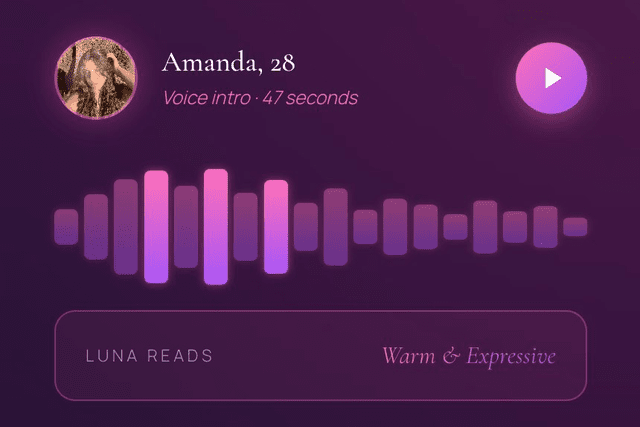
Why are voice intros better than photos? Because a voice carries the things a photo cannot: warmth, humor, energy, the way someone actually is. You can…
The Dynamics of Long-Distance Relationships
Quick Answer: Long-distance relationships work when two people share a clear goal, communicate honestly, and protect the connection with small daily rituals instead…
Why Dating Apps Don’t Work Anymore (And What Actually Does)
Why Dating Apps Don’t Work Anymore If this sounds familiar, you are not bad at dating. You are using tools that were…