
Relationship Anxiety in 2026 – Why Swiping Makes It Worse and What Actually Helps
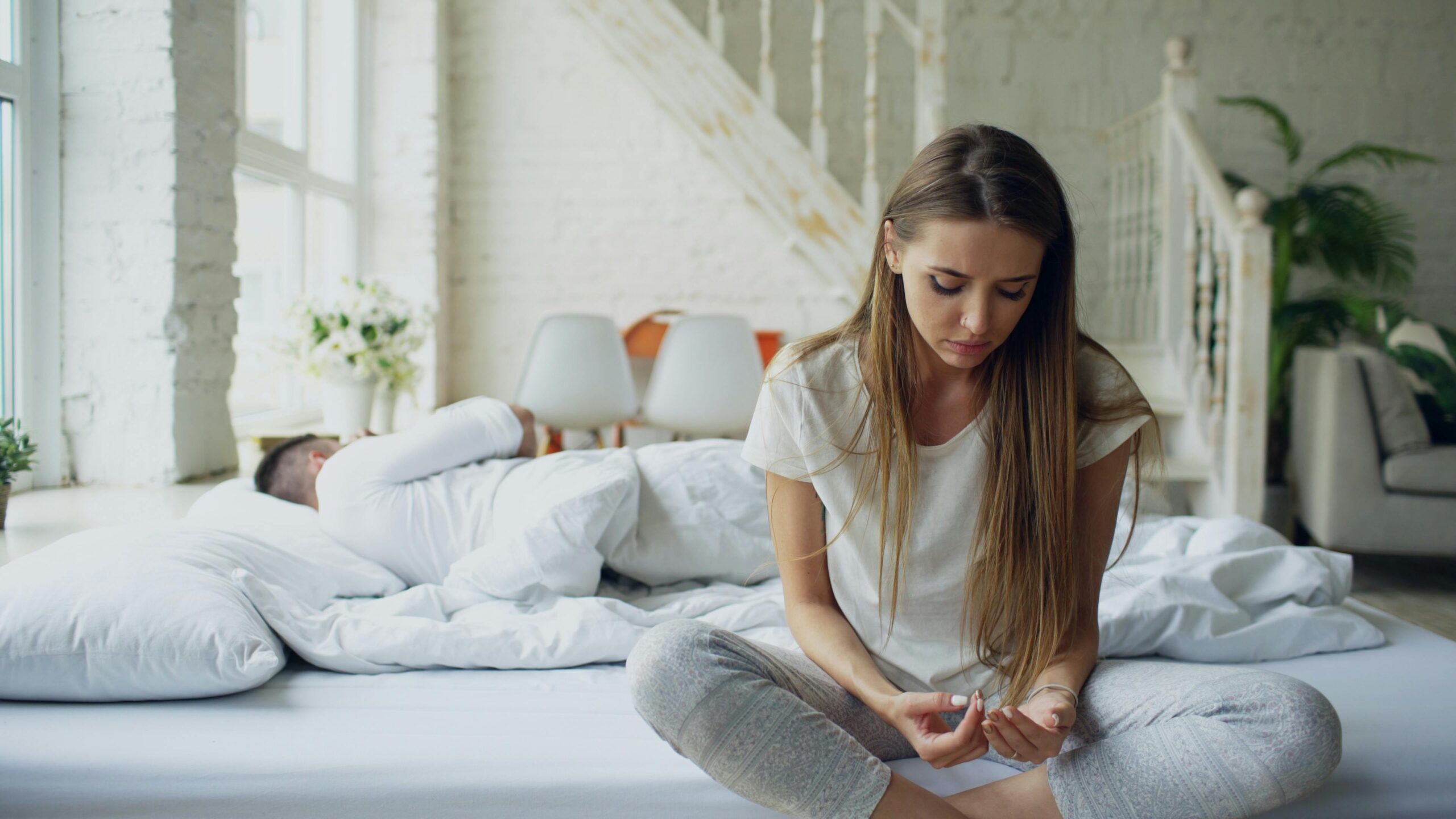
Does relationship anxiety get worse with dating apps? If you have ever closed Hinge feeling more anxious than when you opened it, you already know the answer. But understanding exactly why swiping amplifies anxiety, and what you can do about it, might change how you approach dating entirely.
Here is what is really going on inside your brain every time you pick up your phone and start scrolling through strangers.
Your brain was not built for this
Think about how humans met each other for thousands of years. Through shared spaces. Mutual friends. Repeated encounters at the same market or village, or workplace. You saw someone several times before anything happened. You watched how they treated other people. You heard them laugh. You noticed the way they paused before they spoke.
Now think about what a dating app asks your brain to do. Evaluate a stranger in under three seconds based on a handful of curated photos and a bio written to impress. Then do it again. And again. And again. Forty, fifty, a hundred times in a single sitting.
Related Post: Why Is Dating So Hard in 2026? (And What Nobody Tells You About Why It Hurts)
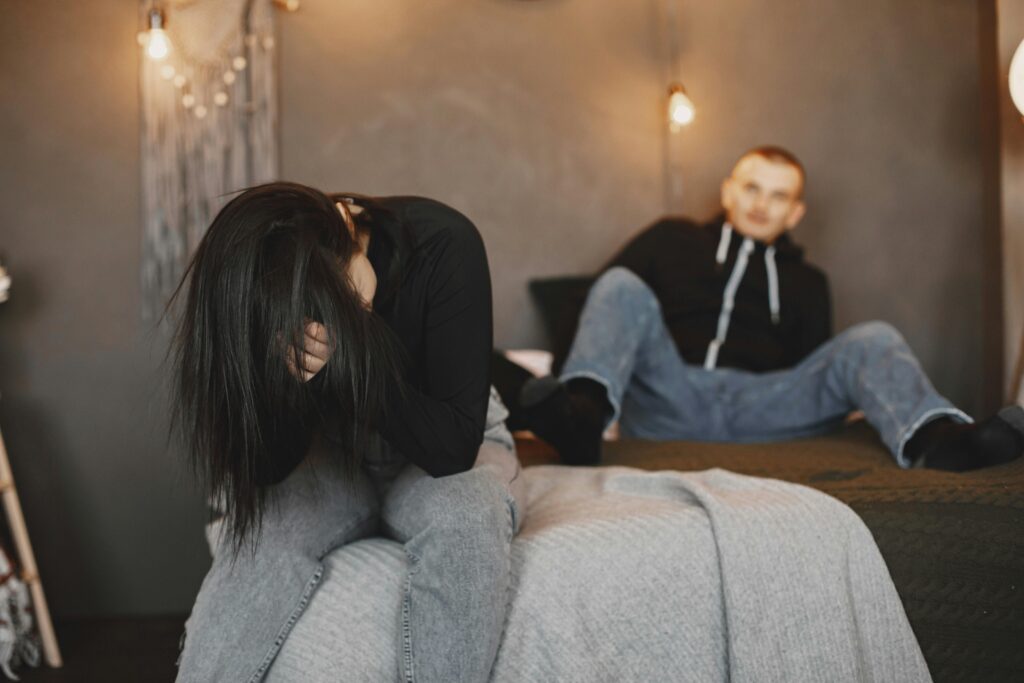
Your nervous system was not designed for this volume of social evaluation. A 2026 meta-analysis from Arizona State University looked at data from over 26,000 people across 23 studies and found something that should worry all of us. Dating app users showed significantly worse mental health outcomes, including higher levels of anxiety, depression, loneliness, and psychological distress, compared to people who did not use dating apps at all.
This is not a coincidence. The apps are triggering something very specific in your brain, and if you already carry any relationship anxiety, they are making it dramatically worse.
The comparison trap that never closes
Relationship anxiety feeds on comparison. Am I good enough? Are they really interested? Is someone better out there? Could I do better? What if I chose wrong?
In the real world, these thoughts come and go. In a dating app, they are the entire operating system.
Every swipe is a comparison. Every match raises the question of whether you should keep looking. Every conversation that fizzles confirms the fear that you are not enough or that genuine connection is impossible. And unlike real life, where options are naturally limited by geography and social circles, an app presents you with what feels like infinite choice.
Psychologists call this the paradox of choice. When you have too many options, you do not feel liberated. You feel paralysed. You second-guess every decision because there is always the nagging sense that something better might be one more swipe away. For someone with relationship anxiety, this is gasoline on a fire that was already burning.
Research published in 2025 confirmed what many of us suspected. People who used dating apps for social approval, to feel validated or wanted, ended up feeling lonelier over time. The temporary dopamine hit of a new match wore off quickly, replaced by the familiar ache of wondering whether any of it was real.
Related Post: Is It Possible to Find Real Love on a Dating App? What the Data Says
Why the anxious get more anxious
If you lean toward anxious attachment, and a significant portion of the dating population does, apps are particularly brutal.
A 2025 study of 381 dating app users found that people with higher attachment anxiety reported lower perceived success on dating apps and felt worse after using them. The same traits that make in-person dating difficult for anxiously attached people, overthinking messages, reading into response times, seeking constant reassurance, become amplified in the app environment where ambiguity is everywhere, and clarity is almost nonexistent.
Think about what a dating app actually gives an anxious person to work with. A match that could mean anything from genuine interest to boredom, swiping at midnight. Messages that arrive on someone else’s schedule with no way to read tone. The constant possibility of being ghosted without warning or explanation. Read receipts that show someone saw your message and chose silence.
Every one of these features is designed to maximise engagement for the app company. Every one of them is also engineered, whether intentionally or not, to maximise anxiety for the user.
The ghost in the machine
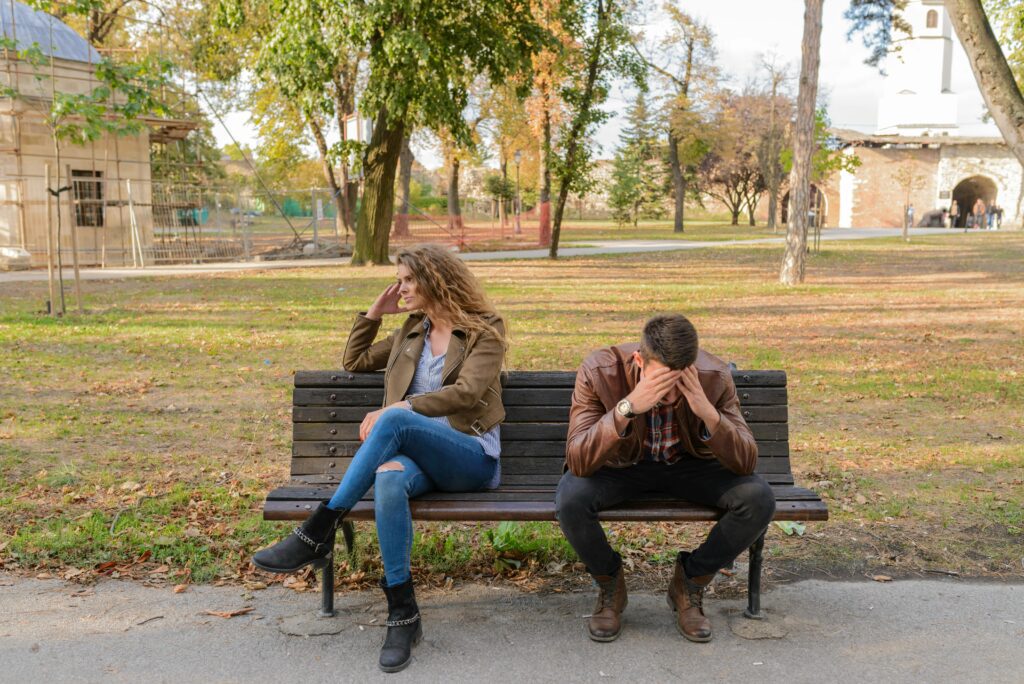
Let us talk about ghosting, because it might be the single most anxiety-producing behaviour in modern dating, and apps have made it the default.
In a world before dating apps, disappearing on someone you had been talking to was considered genuinely rude. You would run into them at the pub. Mutual friends would ask what happened. There were social consequences.
On an app, ghosting costs nothing. There is no social penalty. No mutual friends to answer to. No awkward encounter at the supermarket. You just stop responding, and that person ceases to exist in your world.
For someone with relationship anxiety, being ghosted is not just disappointing. It is confirmation of their deepest fear. I was not enough. I said something wrong. There is something fundamentally unlovable about me. And because the ghost never explains why they left, the anxious mind fills in the blanks with the worst possible story.
The cruelest part is that the more you are ghosted, the more you start to expect it. You begin preemptively bracing for abandonment in every new conversation. You hold back. You do not invest. You become the very thing you were afraid of, emotionally unavailable, because vulnerability has been punished so many times that your nervous system will not let you go there again.
The dopamine roller coaster
Dating apps are engineered like slot machines. Variable reward schedules. Unpredictable outcomes. Just enough positive reinforcement to keep you pulling the lever.
A new match triggers a small dopamine release. So does a new message. So does seeing that someone liked your photo. But these rewards are inconsistent. Some days you get ten matches. Some days you get none. Some conversations spark. Most die. The unpredictability is the whole point because unpredictable rewards are the most addictive kind.
For someone with relationship anxiety, this roller coaster is devastating. The highs feel like hope. The lows feel like proof that love is impossible. And the cycle between them, the constant up and down, keeps the nervous system in a state of low-grade hypervigilance that eventually starts to feel like your normal.
Researchers have found that spending more than 45 minutes a day on swipe-based platforms leads to a 40 percent increase in emotional depletion. That is not casual tiredness. That is your emotional reserves being drained by an app that profits from keeping you slightly dissatisfied and always coming back.
What actually helps
If you have read this far and feel seen rather than hopeless, good. Because understanding the problem is the first step toward solving it. Here is what actually reduces relationship anxiety in the context of modern dating.
Set hard limits on app time. Not vague intentions. Actual limits. Twenty minutes a day. No swiping in bed. No opening the app when you are already feeling low. Research from the American Psychological Association shows a 60 percent reduction in dating-related anxiety when people implement strict usage boundaries. Your phone has screen time settings. Use them.
Stop treating matches like auditions. The moment you start performing for a stranger on an app, anxiety wins. Instead of trying to impress, try to connect. Ask a question you genuinely want the answer to. Share something you have not rehearsed. The people worth meeting will respond to your honesty. The ones who do not were never going to be your person.
Move offline quickly. Texting is anxiety fuel. You cannot read tone. You cannot read body language. You are left interpreting words on a screen through whatever emotional lens you happen to be wearing that day. Meet in person within a week if possible. A thirty-minute coffee will tell you more about compatibility than a month of messaging.
Be honest about what you want. This sounds simple but almost nobody does it. If you want a relationship, say so. If emotional depth matters to you, lead with it. The right person will not be scared off by honesty. They will be relieved by it. Forty-two percent of singles say clarity about intentions is the most attractive quality someone can have.
Consider how the app itself affects you. Not all platforms create the same level of anxiety. Swipe-heavy apps with rapid judgment tend to be worse for anxious people than platforms built around deeper profiles, voice-based connection, or values-based matching. Pay attention to how you feel during and after using a specific app. If it consistently makes you feel worse, that is not a personal failing. It is useful information about a product that is not designed for your well-being.
Stop swiping when you are lonely. This is counterintuitive because loneliness is exactly when most people reach for the app. But swiping from a place of emotional need almost always leads to worse decisions, more anxiety, and deeper disappointment. Open the app when you are feeling grounded and calm. Put it down when you are not.
Related Article: How to Handle Relationship Anxiety
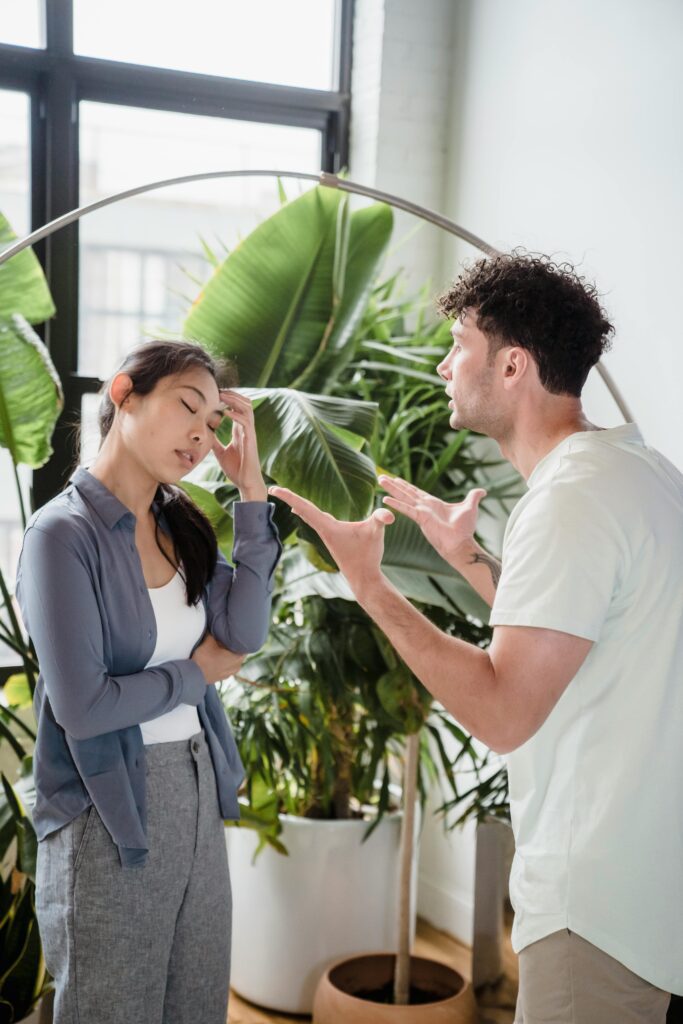
The future of dating does not have to feel like this
Here is what gives me genuine hope. The conversation is shifting.
Singles in 2026 are demanding something different. They want depth over dopamine. Alignment over attraction. Real conversations over performed ones. Fifty-six percent say honest conversation is what matters most. Almost half want empathy after rejection instead of silence. The word people use most when describing what they want from dating this year is not exciting or fun. It is hopeful.
The apps have not caught up yet. Most of them are still running the same swipe and judge model from 2012 with better graphics. But a new wave of platforms is starting to ask a different question. Not who looks good in photos, but who are you really, and what kind of love are you actually ready for?
When matching starts with values instead of vanity, something shifts. The anxiety drops because you are not performing. You are being seen. And being seen, truly seen, by someone who understands what you are looking for? That is the opposite of anxiety.
That is alignment.
—
CoreAllure is a dating app that starts with who you are, not what you look like. We ask the questions other apps are afraid to, then match you on values, energy, and voice. Join the waitlist at coreallure.com.
Related Article: Relationship Anxiety: Understand the Signs and Ways to Cope
Ready for a different kind of dating app?

Why the 48 Hour Rule In Dating Apps Actually Works
Quick Answer: Why does the 48 hour rule work? Because it removes the one thing that quietly ruins dating apps, the endless limbo…
Is It Time to Delete Dating Apps? What Happens When You Go Offline in 2026
Should you delete dating apps in 2026? A growing number of singles already have. Between 2023 and 2024, 1.4 million people in…
Dating App Burnout Is Real and Here Is How To Heal From It
Dating app burnout is affecting millions of people right now. And if you are reading this, there is a good chance you…